Sport Pilot License Near Me: 7 Questions to Ask Before You Enroll in 2026
Published by:
FlyTech Pilot Academy
You have three tabs open, each one a flight school within an hour of home, and every one of them says you can start flying this month. From the outside they look alike. Underneath, the airplane you would train in, how fast you can get on the schedule, and how the bills arrive decide whether you finish your sport pilot certificate in a steady six months or stall out halfway.
If you are searching for a sport pilot license near me in Kansas City, Northwest Missouri, or Northeast Kansas, these seven questions sort the options quickly. For each one, we explain why it matters, what a clear answer sounds like, and how we answer it here at FlyTech Pilot Academy, where our light sport pilot training runs out of Rosecrans Memorial Airport (KSTJ) in St. Joseph.
1. Which Airplane Will You Train In, and Does It Fit Sport Pilot Rules?
Start with the airplane, because your certificate is only as useful as the aircraft it lets you fly. The FAA’s MOSAIC changes, which took effect for sport pilots on October 22, 2025, widened that list. A sport pilot can now act as pilot in command of an airplane with a clean stall speed of 59 knots or less and up to four seats, and you still carry one passenger. The airplane also needs fixed landing gear and a simple propeller unless you get extra training and an endorsement. The details are in 14 CFR 61.316, and the FAA summarizes the update on its Sport Pilot certification page.
Eligibility depends on each airplane’s certificated numbers, not its brand or how many seats it has. A clear answer names the exact airplane you will train in and explains why it qualifies. A vague answer like “one of our planes” leaves you guessing.
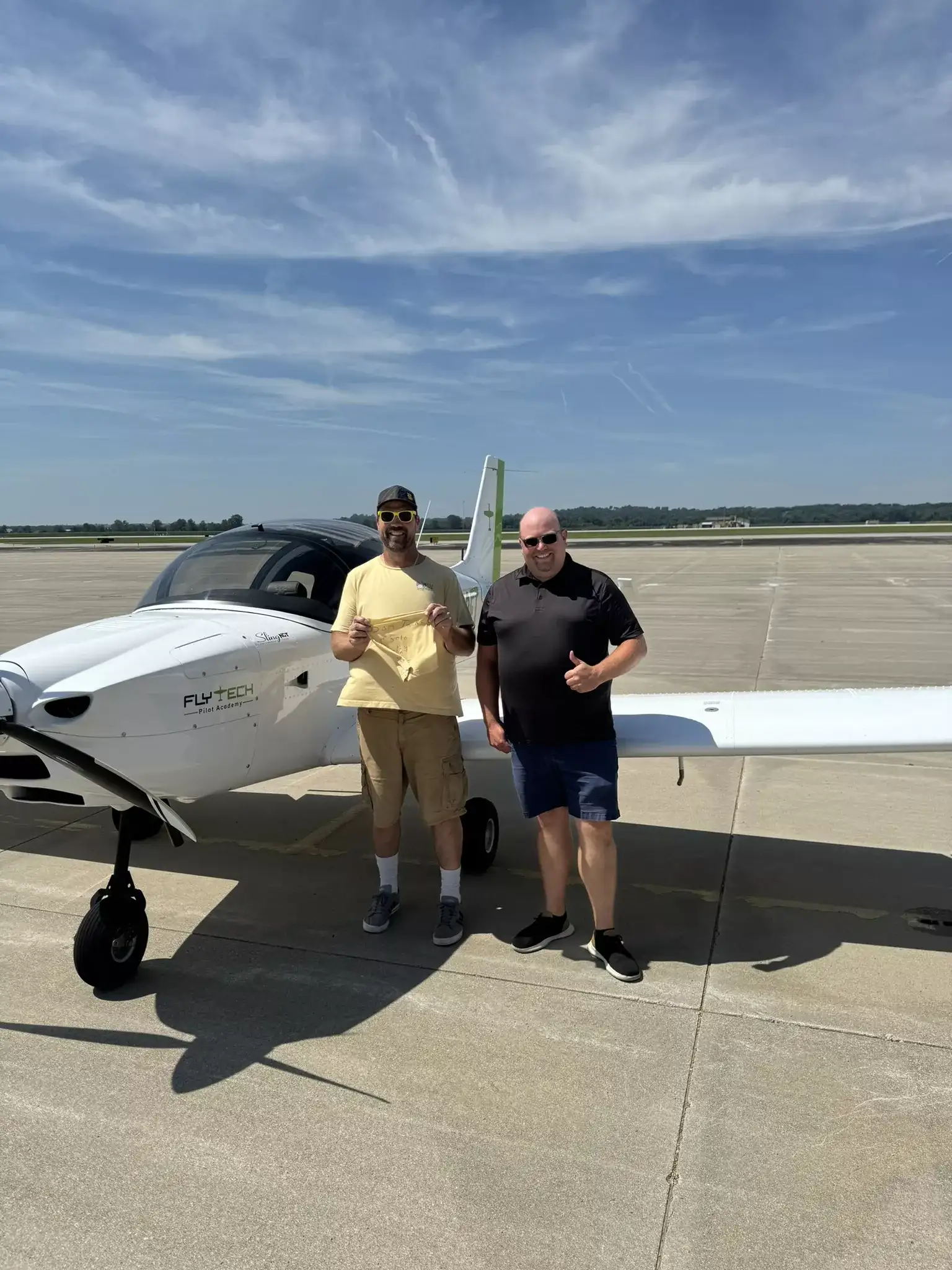
Our sport students train in the Sling LSA, a two-seat, low-wing airplane with a Garmin glass cockpit, fuel-efficient Rotax engine, and side-by-side seating. You can meet it on our fleet page, and our post on sport pilot in the MOSAIC era explains what the new rules opened up.
2. How Easy Is It to Get on the Schedule With an Instructor?
A great airplane does not help if you can only book it every third week. Long gaps between lessons mean the first twenty minutes of each flight go to relearning what you lost, and you pay for that time.
A clear answer shows you how booking works and how far out lessons are open, ideally with availability you can check yourself.
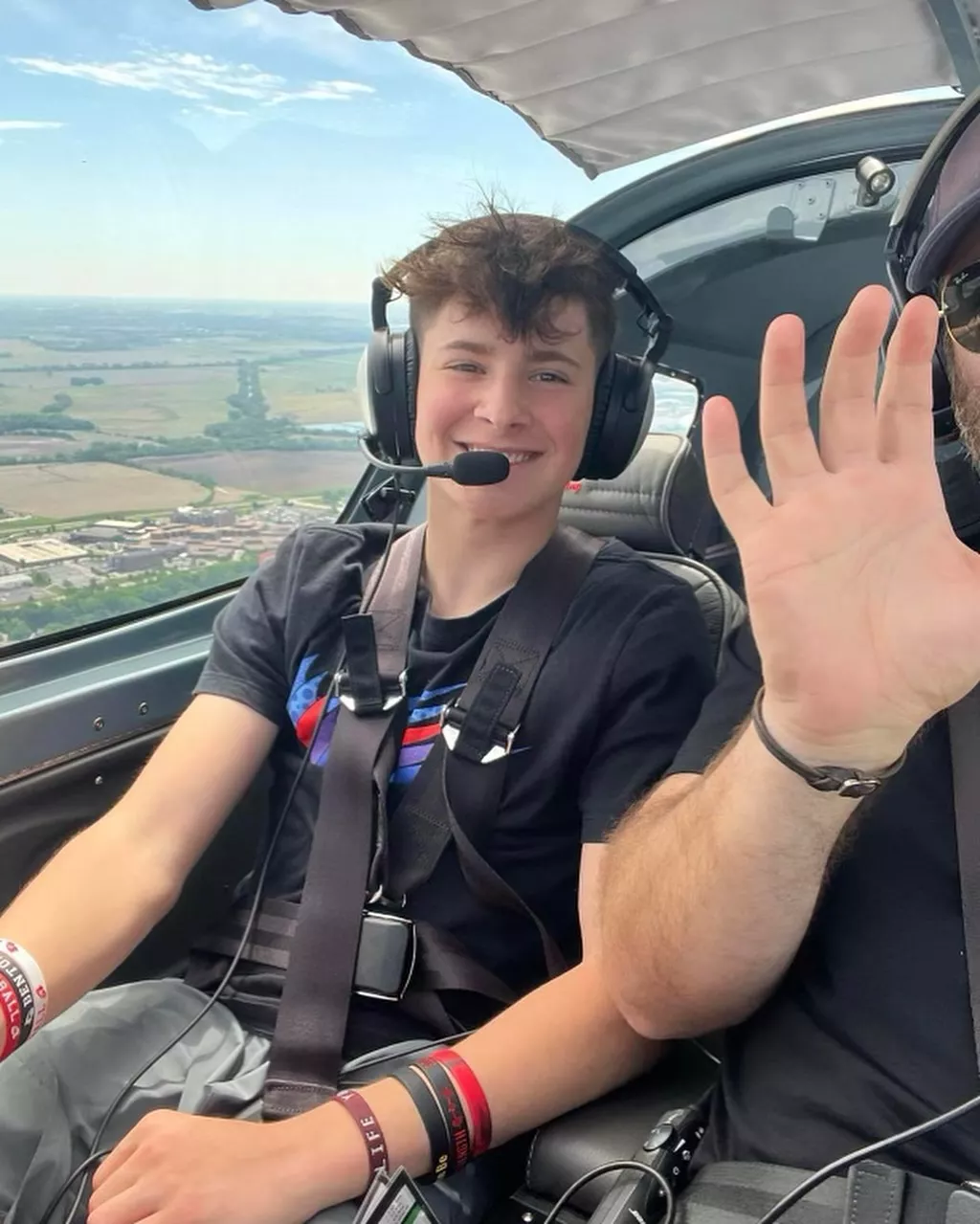
At FlyTech, you book online, any time, and see which airplanes and instructors are open in real time, with automatic reminders. You can grab an open slot from your phone on a lunch break. Our instructors are FAA-certified CFIs, CFIIs, and MEIs, and you can meet them on our team page. Most of our part-time sport students fly two or three lessons a month and finish in about six months, though your pace, the weather, and your study time all move that. Our week-by-week sport pilot lessons guide shows how those months fill in. Contact us to see current openings.
3. How Much of Your Lesson Is Spent Waiting at the Airport?
You pay for the airplane while the engine runs. At a busy airport, that can include long waits at the hold-short line while traffic lands ahead of you. Those minutes add cost and take time away from practicing the maneuvers you came to learn.
A clear answer describes the airport honestly: how busy it gets, how long taxi and run-up usually take, and how the pattern feels on a typical day.
Our home field, KSTJ, is uncongested, so more of every hour you pay for is spent flying. On a typical Saturday morning, the Sling rolls from run-up to the runway and you spend the hour working on landings. KSTJ sits about 45 to 60 minutes from Kansas City, and we wrote about why many Kansas City students choose St. Joseph if the drive is on your mind.
4. How Does Billing Work, and What Will the Whole Certificate Cost?
Ask to see the hourly rates before you enroll, and ask whether you pay per lesson or up front for a package. Pay as you go keeps your money in your pocket until you fly. A package can come with a discount, but it ties up cash before you know the school is right for you.
| What you are planning | How we handle it |
|---|---|
| Airplane time | $185 an hour for our Sling, fuel included |
| Instructor time | $60 an hour, in the air and on the ground |
| Simulator time | $50 an hour in our Redbird MCX |
| Group ground school | $30 an hour |
| Payment | Pay as you go, with bulk time at discounted rates if you prefer |
| Full Sport Pilot Certificate | Around $8,500 estimated, paid as you go |
That $8,500 figure is an estimate; your total depends on how many hours you fly before you are ready. Every flight is invoiced through your scheduling account, so you can track your spending lesson by lesson. Rates can change, so contact us to confirm current rates. For the per-lesson math, read how much a sport pilot lesson costs in 2026.
If you would rather spread the cost out, we offer financing options: AOPA financing for recreational flyers, Stratus Financial, and local bank loans for Sport or Private training. Our financing page walks through each one.
5. What Happens When the Weather Turns or Your Plans Change?
Missouri and Kansas weather will cancel some of your lessons, so find out who pays when it does. If a weather cancellation costs you money, every gusty forecast turns into a money decision.
A clear answer spells out the cancellation notice the school needs from you and what happens to your slot when the weather is the problem.
Here, if conditions are not safe, we reschedule at no charge. We often turn that time into ground instruction or a simulator session, so a windy Saturday still moves your training forward. For changes on your end, we ask for at least 24 hours’ notice to avoid a charge. Our post on understanding weather in flight training explains how instructors make those calls.
6. What Simulator and Ground School Support Comes With Training?
Sport training is mostly flying, but you still need to pass the FAA knowledge test and know the rules, weather, and airspace cold. You also need a place to rehearse procedures when the airplane is not the right tool.
A clear answer explains how you will study for the written test, whether there are in-person sessions, and whether a simulator is available for practice.
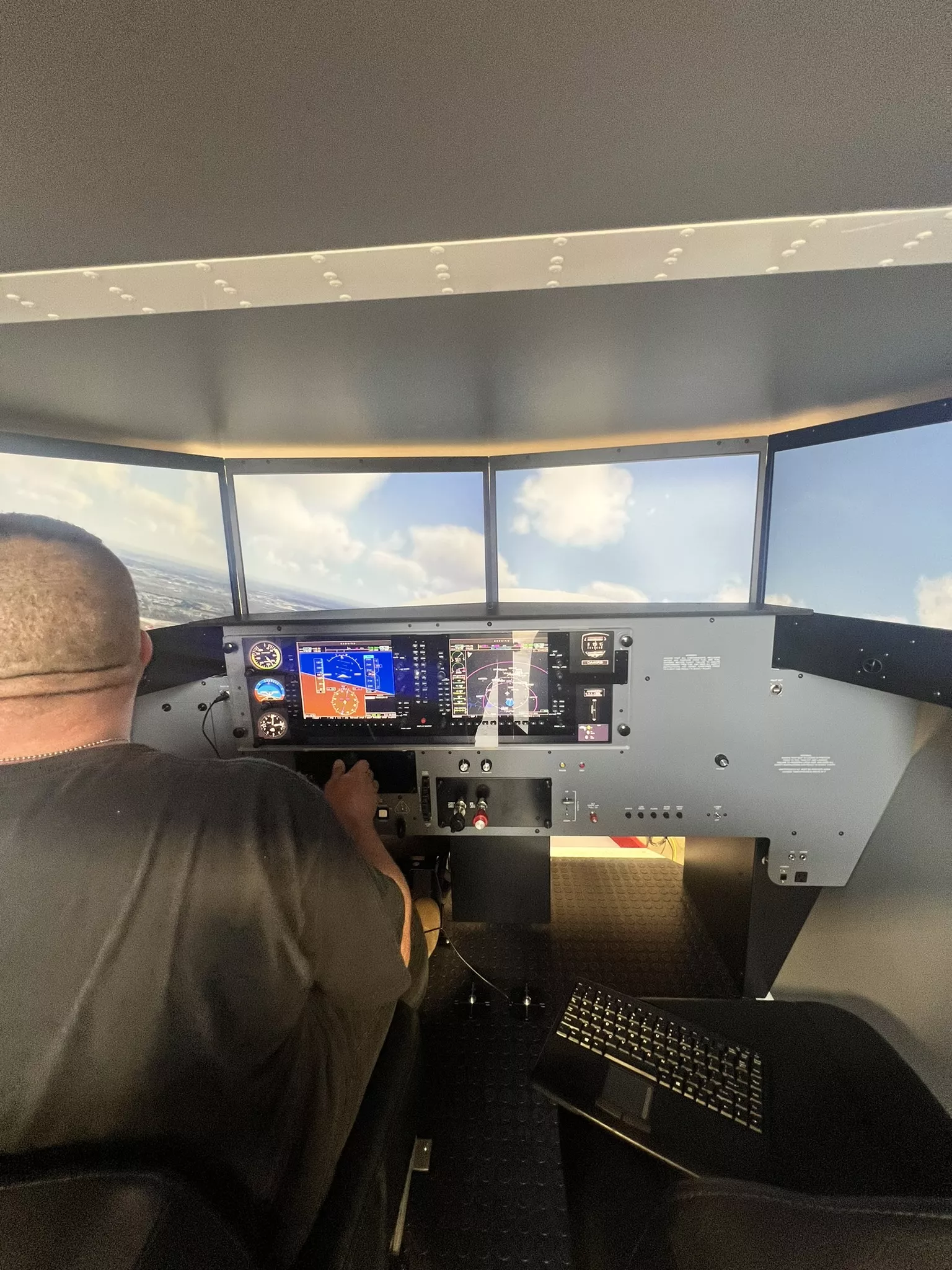
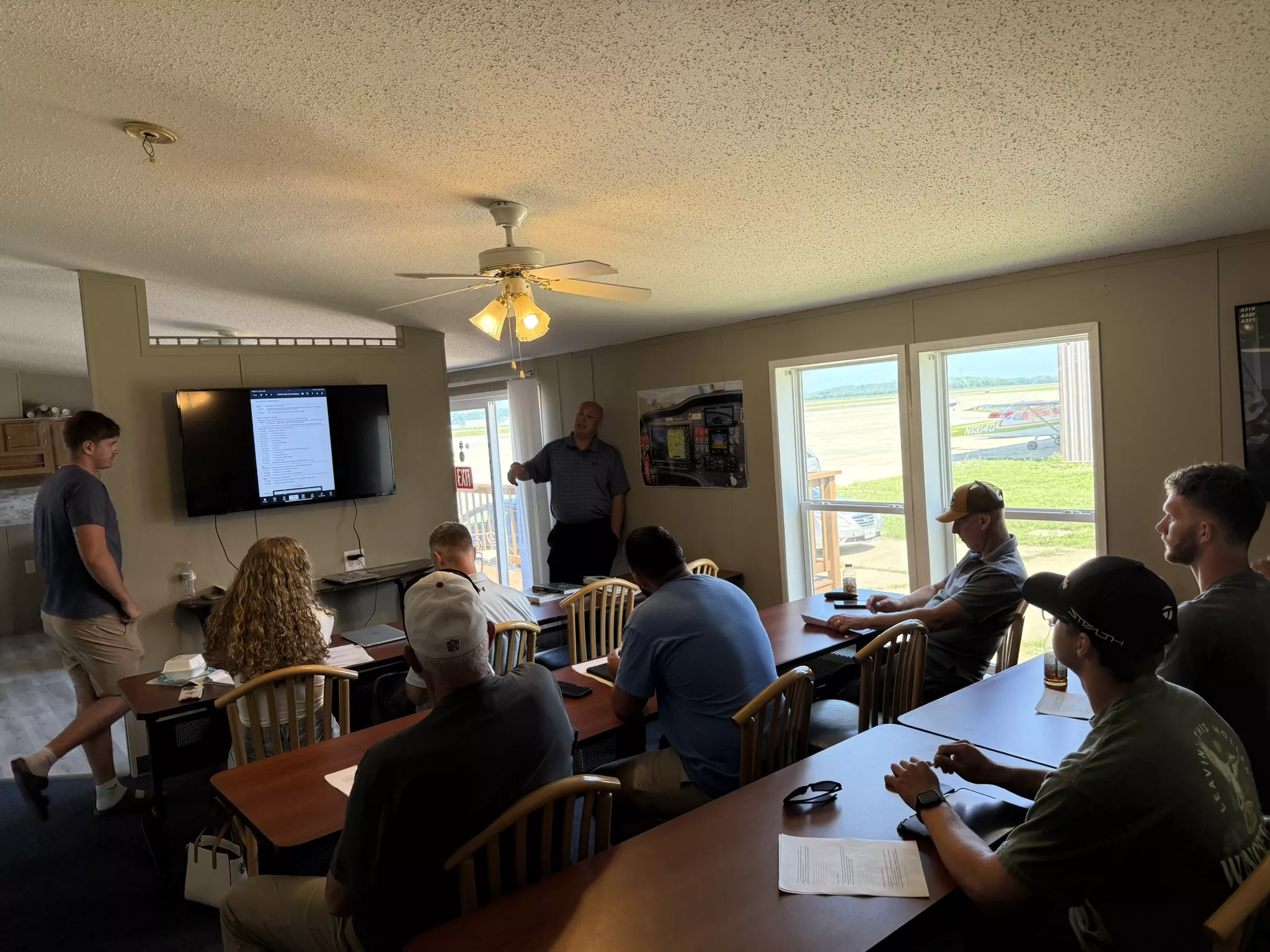
We use online ground school, so you can study on your own time, then bring questions to in-person sessions with our instructors and to the cockpit. Our ground school sessions add structure if you like learning in a group. We also train in a Redbird MCX full-motion simulator with 200-degree visuals, where you can rehearse a procedure until it feels routine, at a lower hourly rate than the airplane.
7. Can Your Sport Training Carry You to a Private Certificate Later?
Many people start with sport because it needs as little as 20 hours of flight time under the FAA minimums, and because a valid U.S. driver’s license can stand in for an FAA medical as long as you follow its restrictions, your most recent FAA medical application (if you ever made one) was not denied, and you know of no condition that would make flying unsafe. Later, plenty of sport pilots want to carry more passengers, fly at night, or travel farther.
A clear answer explains whether the school also trains private pilots, and whether you can keep the same airplane and instructors when you move up.
The hours in your logbook keep counting. A private certificate needs at least 40 hours of flight time under 14 CFR 61.109, plus night training, flying by reference to instruments, and longer solo cross-country trips, so you build on what you have. We train Private Pilot students too, and the Sling is used for both sport and private training, so the airplane you learned in can come along with you.
How to Use These Questions on Your Next School Visit
Write the seven questions down and take them to every discovery flight or school visit. Listen for specific answers: an airplane by name, real booking availability, posted rates, and a written cancellation policy. If a program cannot answer one of them in plain terms, that gap is worth weighing before you enroll.
It also helps to know how a school is structured. We train under Part 61, which lets us build the lesson plan around your schedule; our post on Part 61 vs Part 141 explains the difference. If you are coming from farther away, we have limited on-airfield housing, and our Kansas City pilot training page covers the commute.
Frequently Asked Questions
How do I find a sport pilot license near me?
Look for schools within a drive you can make two or three times a month, then run each one through the seven questions above. If you live in Kansas City or Northwest Missouri, our training at KSTJ is about 45 to 60 minutes away. See our light sport pilot training page for program details.
Can a sport pilot fly a four-seat airplane after MOSAIC?
Yes, if the airplane meets sport pilot limits, including a clean stall speed of 59 knots or less, fixed gear, and a simple propeller. You can still carry only one passenger. Our MOSAIC post covers the changes.
How much does a sport pilot license cost at FlyTech?
We estimate around $8,500 for the Sport Pilot Certificate, paid as you go. Your total depends on how many hours you need. Our lesson cost breakdown shows the math.
How long does sport pilot training take?
Most of our part-time students finish in about six months flying two or three lessons a month. The FAA minimum is 20 hours, and your instructor decides when you are ready. Our general FAQ covers timelines for other certificates.
Do I need an FAA medical for sport pilot training?
No, as long as you hold a valid U.S. driver’s license and meet the conditions above. Private pilot training comes with medical requirements of its own, so plan for that if you move up later.
What should I expect on my first lesson?
You will go through paperwork, a briefing, a preflight walkaround, and time on the controls. Our guide to your first sport pilot lesson walks through it step by step.
Put All Seven Questions to the Test on a Discovery Flight
The fastest way to check our answers is to see them in person. A discovery flight puts you at the controls of our Sling with an instructor beside you, lets you watch how quickly we get from the ramp to the runway at KSTJ, and gives you time to go over rates, scheduling, and a plan that fits your week. Book your discovery flight and start your sport pilot training with every question answered.
FlyTech Pilot Academy
Ready to take the next step in your aviation journey? Our team of expert instructors is here to guide you every step of the way. Whether you’re looking to earn your private pilot certificate or advance your skills with additional ratings, we’re here to help you achieve your goals.