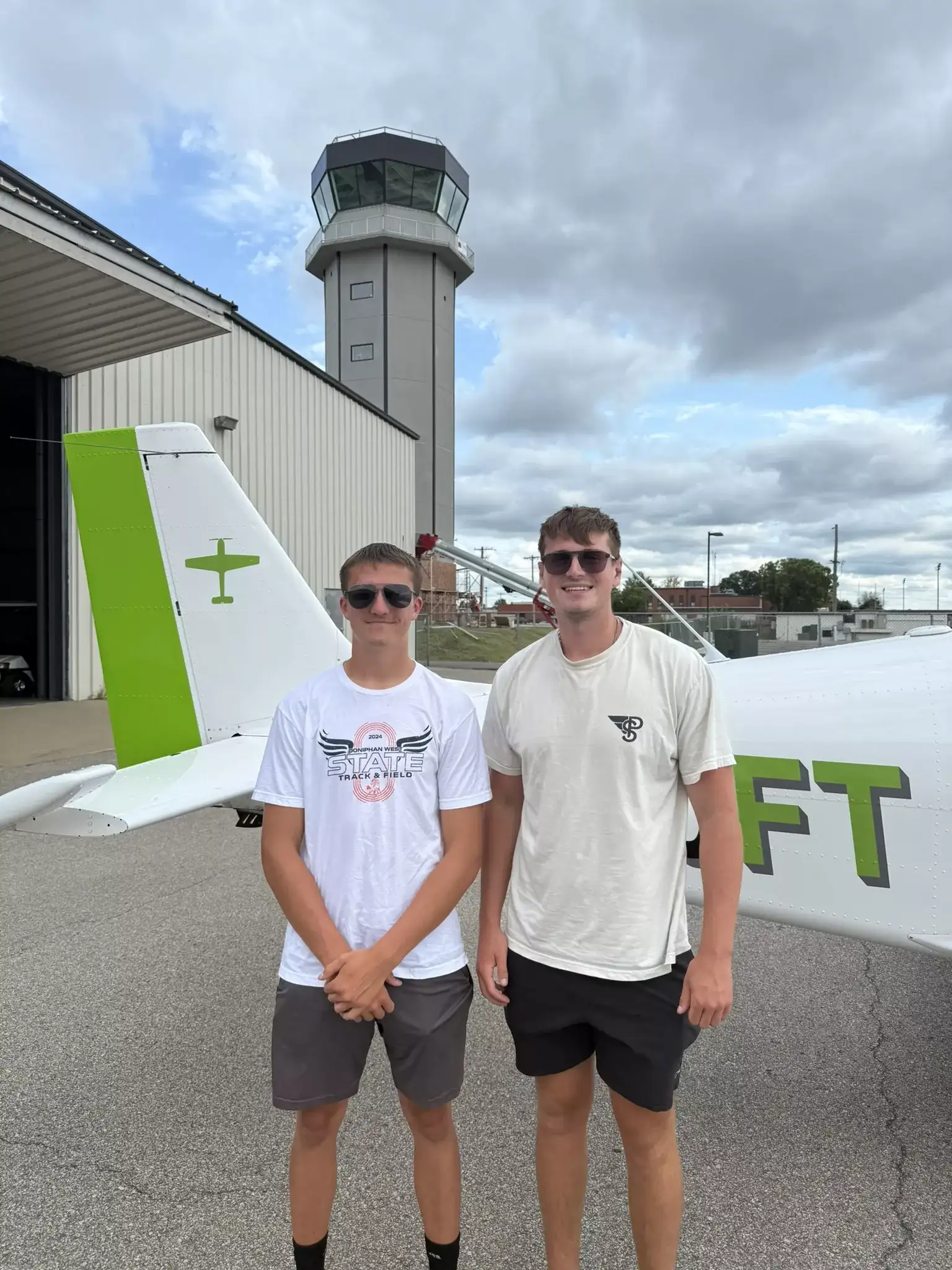
Sport Pilot Lessons in 2026: What You Learn Week by Week
Published by:
FlyTech Pilot Academy
You found a flight school, you can make it to the airport two or three times a month, and now you want to know what all those sport pilot lessons are for. Will you spend weeks just flying in circles? When do you fly alone? When does the checkride show up? At FlyTech Pilot Academy, most of our part-time students earn their Sport Pilot Certificate in about six months, flying two or three lessons a month.
That pace is our typical, and your own calendar moves with how often you fly, the weather, and how much you study between lessons. What stays the same is the order. Every student moves through the same five phases, and once you can see them, each lesson has a clear job. Here is what you learn in each phase of our light sport pilot training at Rosecrans Memorial Airport (KSTJ) in St. Joseph, about 45 to 60 minutes from Kansas City.
How Part-Time Sport Pilot Lessons Add Up to About Six Months
The FAA sets the floor. For an airplane, you need at least 20 hours of flight time, with at least 15 hours of training from your instructor and at least 5 hours of solo flight. Inside those hours you also log at least 2 hours of cross-country training with your instructor, 10 takeoffs and landings to a full stop, one solo cross-country, and at least 2 hours of checkride preparation. You can read the FAA’s overview on its Sport Pilot certification page.
Treat twenty hours as the floor. Your instructor signs you off when your flying meets the standard, and many students need more than the minimum to get there. Here is one example of how six months at two or three lessons a month often lays out:
| Phase | Rough window at a part-time pace | What you leave the phase able to do |
|---|---|---|
| Pre-solo maneuvers and landings | Months 1 to 2 | Control the airplane, fly the pattern, land safely |
| First solo | End of month 2 or month 3 | Fly the pattern alone with your instructor’s endorsement |
| Solo practice | Months 3 to 4 | Build confidence and judgment on your own |
| Cross-country | Months 4 to 5 | Plan a trip, navigate, land at other airports |
| Checkride prep | Months 5 to 6 | Pass the FAA knowledge test and practical test |
Treat the windows as a sketch. A student who flies weekly moves faster, and a student who skips a month spends part of the next lesson getting the feel back. If you want the full-time version, see how to earn your sport pilot certificate in one month.
The First Weeks: Learning to Control the Airplane and Land It
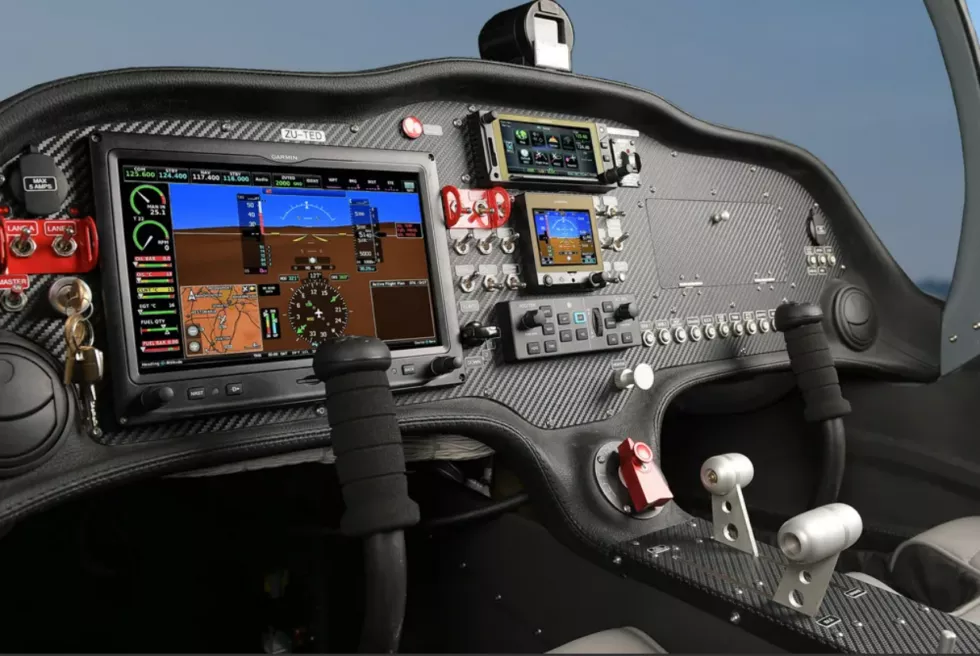
Your early sport pilot lessons are about feel and control. You learn the preflight walkaround on our Sling, how to taxi, how to take off, and how to hold altitude and heading. Then come climbs, descents, turns, slow flight, and stalls, which is the airplane losing lift when the wing’s angle gets too steep. Stalls sound scary, and practicing them with your instructor is exactly what takes the fear out of them.
The biggest chunk of these weeks goes to the traffic pattern and landings. The pattern is the rectangle every airplane flies around the runway before landing. You will fly it again and again: takeoff, climb, turn, descend, land, and go around when an approach does not look right. Our airport is uncongested, so more of each lesson goes to landings instead of waiting in line to take off. That quiet pattern is a big part of why Kansas City students make the drive to St. Joseph.
On the ground, you start studying too. Our online ground school lets you work through the rules, weather, and airplane systems at home, and in-person sessions fill the gaps. Starting early keeps the knowledge test from piling up at the end. You can see your options on our ground school page.
Two pieces of paperwork belong in these weeks. Apply for your student pilot certificate early, since the FAA requires it before you fly solo. And there is good news on the medical side: for sport pilot training and flying, a valid U.S. driver’s license can take the place of an FAA medical, as long as you follow its restrictions, your most recent FAA medical application (if you ever made one) was not denied, and you know of no condition that would make flying unsafe.
Your First Solo: What Has to Happen Before Your Instructor Steps Out
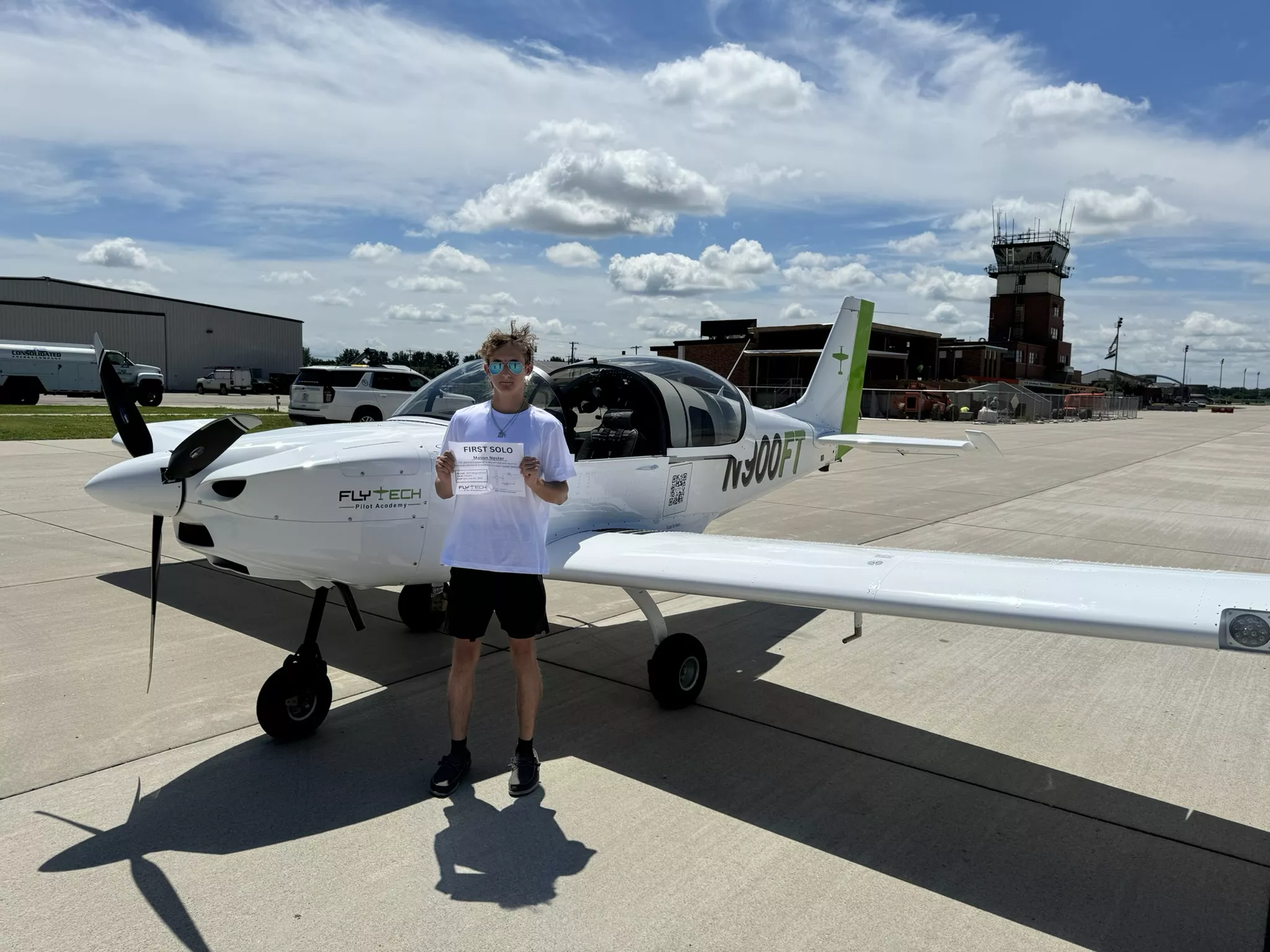
Most people signing up already picture their first solo. It usually happens on an ordinary lesson. You fly a few laps of the pattern together, your instructor asks you to stop short of the runway, climbs out, and you take the airplane around alone.
Before that day, a few things have to be true. Your instructor gives you a short written pre-solo test on the flight rules, our local airspace, and the airplane, then reviews every answer you missed. You need logged training on preflight, taxiing, takeoffs and landings, the traffic pattern, stalls, emergency procedures, and go-arounds. Then your instructor endorses your logbook, which is a signed entry saying you are cleared to solo in that make and model.
Your landings set the timing. Once they are consistent and a go-around feels routine, your instructor makes the call. Our light sport pilot training FAQ covers the student pilot certificate and medical questions most people ask around this point.
Solo Practice: Turning a Few Pattern Laps Into Real Confidence
After the first solo, you alternate. Some lessons are dual, meaning your instructor is aboard and you push into new skills. Others are solo, where you practice what you already know: landings, pattern work, and maneuvers in the practice area. The FAA requires at least 5 hours of solo flight for the certificate, and these weeks are where most of it gets logged.
Solo time builds judgment that belongs to you. With nobody in the right seat to fix a radio call or point out a wind shift, you notice it and decide what to do, and the checkride tests exactly that kind of decision.
Keep an eye on one detail. Your solo endorsement needs to be renewed by your instructor every 90 days. A steady lesson rhythm makes that automatic. A long gap means a quick refresher before you fly alone again. If you want a stronger grip on the rules behind all this, read our guide to FAA regulations every student pilot should know.
Cross-Country Weeks: Planning a Trip and Flying It Alone
Cross-country flying is where sport pilot training starts to feel like real travel. With your instructor, you log at least 2 hours of cross-country training. You learn to plan a route, check the weather, figure fuel, follow your plan with a chart and an electronic flight bag such as ForeFlight, and land at airports you have never seen.
Then comes the solo version. The FAA requires one solo cross-country of at least 75 nautical miles total, with full-stop landings at two or more points and one leg of at least 25 nautical miles. Picture spreading a sectional chart across the kitchen table on a weeknight, then flying that route alone on Saturday.
Weather plays a bigger role in these weeks, because you need good conditions at more than one airport. Our guide to weather in flight training shows how we think about it. If clouds roll in, we reschedule weather cancellations at no charge and use the time for ground work or the simulator.
The Final Stretch: Knowledge Test, Mock Checkride, and the Real One
Two tests stand between you and your certificate. The first is the FAA knowledge test, a written exam on rules, weather, navigation, and aircraft basics. If you kept up with ground school from the first weeks, it is often done before you reach this phase.
The second is the checkride, the practical test. An FAA examiner asks you questions on the ground, then flies with you while you show the maneuvers and procedures to the FAA’s published standards. Before it, the FAA requires at least 2 hours of training with your instructor in preparation, within the two calendar months before the month of your test.
Most of that prep feels like a mock checkride. Your instructor plays examiner, asks the questions, and calls for maneuvers in the order the real test might. Weak spots show up while there is still time to fix them. When every task meets the standard, your instructor endorses you for the practical test. Our checkride ground school prep post shows how we help students get ready for the oral portion.
How to Keep Part-Time Lessons From Sliding Backward
The biggest risk at a part-time pace is the gap between lessons. Skills fade a little each week you are not flying, and the first part of the next lesson goes to getting them back. A few habits keep your progress moving:
- Book your next lesson before you leave the airport. Our online scheduling shows instructor and aircraft openings any time of day.
- Study between flights. Ten minutes reviewing the next lesson’s maneuvers makes the flight count.
- Use weather days. A canceled flight can become a Redbird simulator session or ground lesson instead of a lost week.
- Give 24 hours’ notice when you need to cancel, so your slot goes to someone else and you avoid a charge.
Money is part of keeping a steady rhythm too. You pay as you go, and financing options for recreational students include AOPA financing and local bank loans. See our financing page for details. For questions about current program pricing, our sport pilot program page and a discovery flight are the best places to start.
Frequently Asked Questions
How many hours do sport pilot lessons take?
The FAA minimum is 20 hours of flight time: at least 15 with an instructor and at least 5 solo. Many students need more than the minimum. Your instructor decides when your flying is ready for the checkride, and you can see what the training includes on our program page.
How long does part-time sport pilot training take?
Most of our part-time students finish in about six months at two or three lessons a month. Flying more often shortens it. Weather and long gaps stretch it. For a faster path, see the one-month plan.
Do I need an FAA medical for sport pilot training?
No. A valid U.S. driver’s license can take the place of an FAA medical for sport pilot training and flying, as long as you follow its restrictions, were not denied on your most recent FAA medical application if you made one, and know of no condition that would make flying unsafe.
When will I fly solo?
When your instructor decides you are ready. At our usual part-time pace, first solo often lands somewhere in months 2 or 3, after the pre-solo test, the required pre-solo training, and your logbook endorsement.
What changed for sport pilots under MOSAIC?
New FAA rules that took effect on October 22, 2025 opened up more aircraft to sport pilots. Night flying is also possible with extra training and an endorsement. Read Sport Pilot in the MOSAIC Era for the full picture.
Where do your sport pilot lessons take place?
At Rosecrans Memorial Airport (KSTJ) in St. Joseph, Missouri, about 45 to 60 minutes from Kansas City. If you are searching for sport pilot training near you in Northwest Missouri or the Kansas City area, our Kansas City pilot training page explains the commute.
Book a Discovery Flight to Start Your First Week
A good way to picture your own six months is to fly the first lesson. A discovery flight puts you at the controls of our Sling with an instructor beside you, lets you see the airport and the pattern you will learn to land in, and gives you time to talk through a schedule that fits your life. Book your discovery flight and start your sport pilot lessons this month.

FlyTech Pilot Academy
Ready to take the next step in your aviation journey? Our team of expert instructors is here to guide you every step of the way. Whether you’re looking to earn your private pilot certificate or advance your skills with additional ratings, we’re here to help you achieve your goals.