
Your First Sport Pilot Lesson in 2026: What to Expect
Published by:
FlyTech Pilot Academy
The night before your first sport pilot lesson, you probably have a list of questions. What do I bring? Do I need a certificate yet? Will I actually fly, or just sit in a classroom? The short answer: you bring your ID, you spend part of the lesson on the ground learning the airplane, and yes, you fly. At FlyTech Pilot Academy, your instructor hands you the controls on day one.
If you already took a discovery flight, you have felt the airplane once. This lesson is different. Now every minute goes in your logbook and counts toward your certificate. Here is what happens, in order, at our sport pilot training home at Rosecrans Memorial Airport (KSTJ) in St. Joseph, about 45 to 60 minutes from Kansas City, and how to walk in ready.
Bring These Documents So Your First Lesson Starts on Time
Federal security rules require every flight school to verify that you are a U.S. citizen before flight training begins, and to keep a record of it. That is why we ask for proof at enrollment, even though nobody asked at your discovery flight. Bring your U.S. passport, or your driver’s license or state ID together with your birth certificate. If you are not a U.S. citizen, contact us before you book, since TSA runs a separate approval process.
Your driver’s license does double duty for sport pilots. For sport pilot training and flying, a valid U.S. driver’s license can take the place of an FAA medical, as long as you follow its restrictions, your most recent FAA medical application (if you ever made one) was not denied, and you know of no condition that would make flying unsafe. The FAA explains the rules on its Sport Pilot certification page.
What you can leave at home: a headset. We provide headsets and training gear for your first few lessons, so you can find out what you like before you buy anything. When you are ready to shop, our new student resources include a recommended gear list.
| What to bring or set up | Why you need it | When |
|---|---|---|
| Passport, or driver’s license plus birth certificate | Citizenship check required before flight training | Enrollment |
| Valid U.S. driver’s license | Takes the place of an FAA medical for sport pilot training | Every lesson |
| IACRA account | Your student pilot certificate application | Enrollment, so it is ready before solo |
| Online ground school login | Study between lessons | First week |
| Pilot logbook | Records every lesson | First lesson |
| Headset | Hearing your instructor and the radio | We provide one at first |
Start Your Student Pilot Certificate Now, Even Though You Will Not Need It for Weeks
You do not need a student pilot certificate to take lessons. You need it before your first solo, and the FAA takes time to process it, so we start it at enrollment. You apply online through the FAA’s IACRA system, and your instructor reviews and signs the application before it goes to the FAA. The FAA’s student pilot certificate page covers the basics.
Age matters here. You must be at least 16 to hold a student pilot certificate in an airplane and at least 17 for the sport pilot certificate itself. A 16-year-old can start lessons and solo, then take the checkride after turning 17. If you are under 18, a parent or guardian signs your liability waiver.
Starting early means the certificate is waiting for you when your landings are ready, instead of the other way around. Our week-by-week guide to sport pilot lessons shows where that first solo usually falls.
What Happens at Enrollment Before You Ever Touch the Airplane
Plan on about 45 to 60 minutes for enrollment. It covers the setup that would otherwise eat into your flying. Together we:
- Start your IACRA application and set up your account in our online scheduling system
- Upload your photo ID and enter your height and weight, which your instructor uses for weight and balance
- Get you logged in to your online ground school and our VFR lesson guide
- Sign the liability waiver and go over pricing for the airplane, the simulator, instructor time, and headsets
- Review where to park and how airplanes come in and out of the hangar
On lesson day, you park behind the barrel hangar and walk in through the rear hangar door. Nobody drives onto the ramp without permission, and only your instructor or Express Flight staff move the airplane out of the hangar. Once you know the routine, you can walk straight to the airplane.
The Ground Briefing: Checking Yourself Before You Check the Airplane
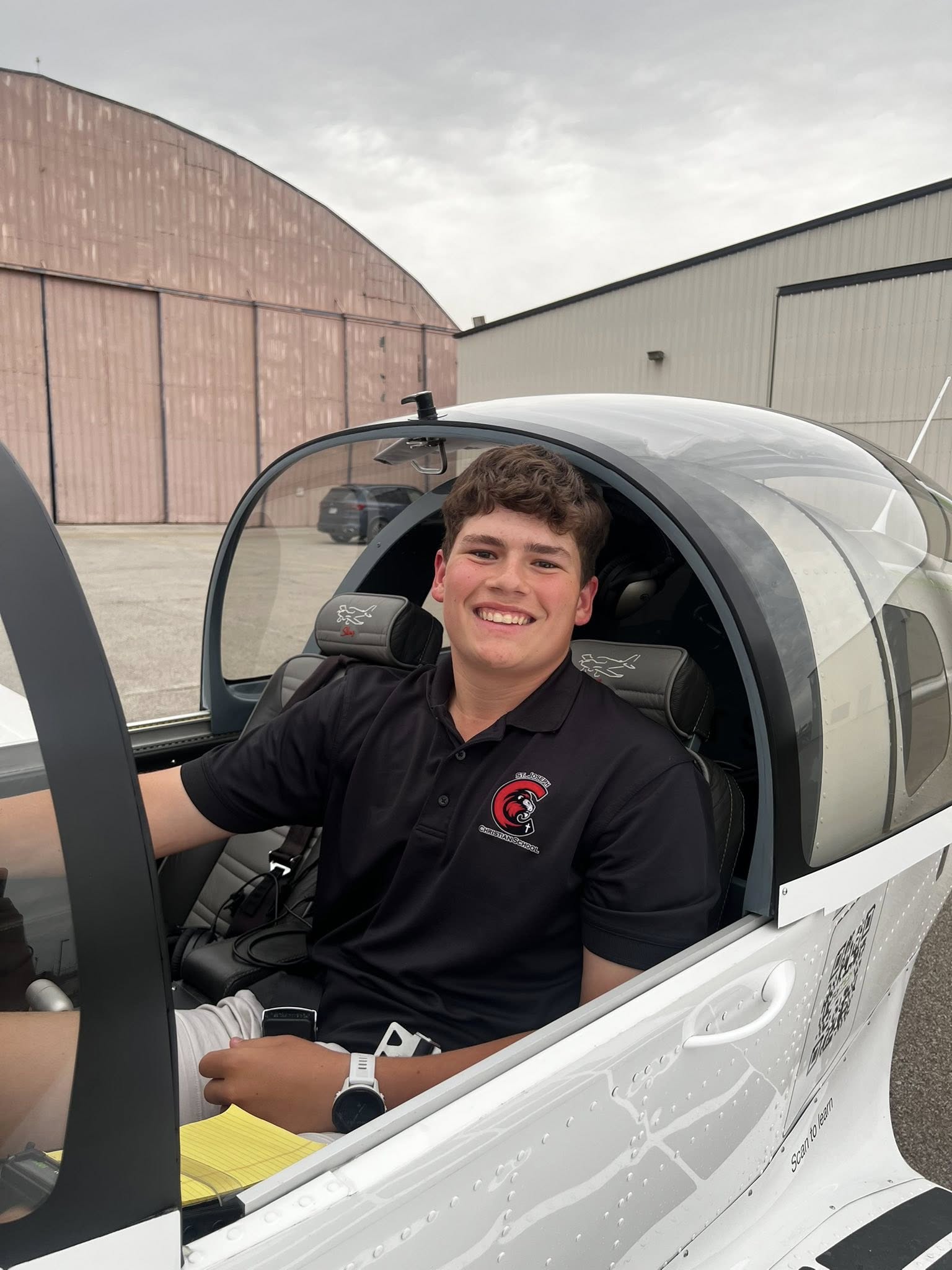
Your first sport pilot lesson opens on the ground. Your instructor starts with IMSAFE, the personal checklist every pilot runs before flying: illness, medication, stress, alcohol, fatigue, and emotion. You will run it before every flight for as long as you fly.
Next comes a look at the documents the airplane must carry and the ones you carry, then a passenger briefing so you know how the seat belts, doors, and emergency exits work. Your instructor also walks you through the engine controls and flight controls before you ever start the engine. Questions are welcome here, and no question is too basic on lesson one.
The Preflight Walkaround: Learning the Sling With a Checklist in Your Hand
Before every flight, a pilot inspects the airplane. On your first lesson, your instructor does it side by side with you, reading from the Sling checklist. You check fuel and oil, run your hand along the wings and control surfaces, look over the propeller and tires, and make sure everything moves the way it should.
You will not remember every item on day one, and your instructor does not expect you to. You are learning the flow of the walkaround, and over the coming lessons you take the lead while your instructor watches. If you want a head start, our new student resources include a video of a Sling preflight and a cockpit tour you can watch at home. You can also meet the airplane on our fleet page.
In the Air on Day One: What You Actually Fly
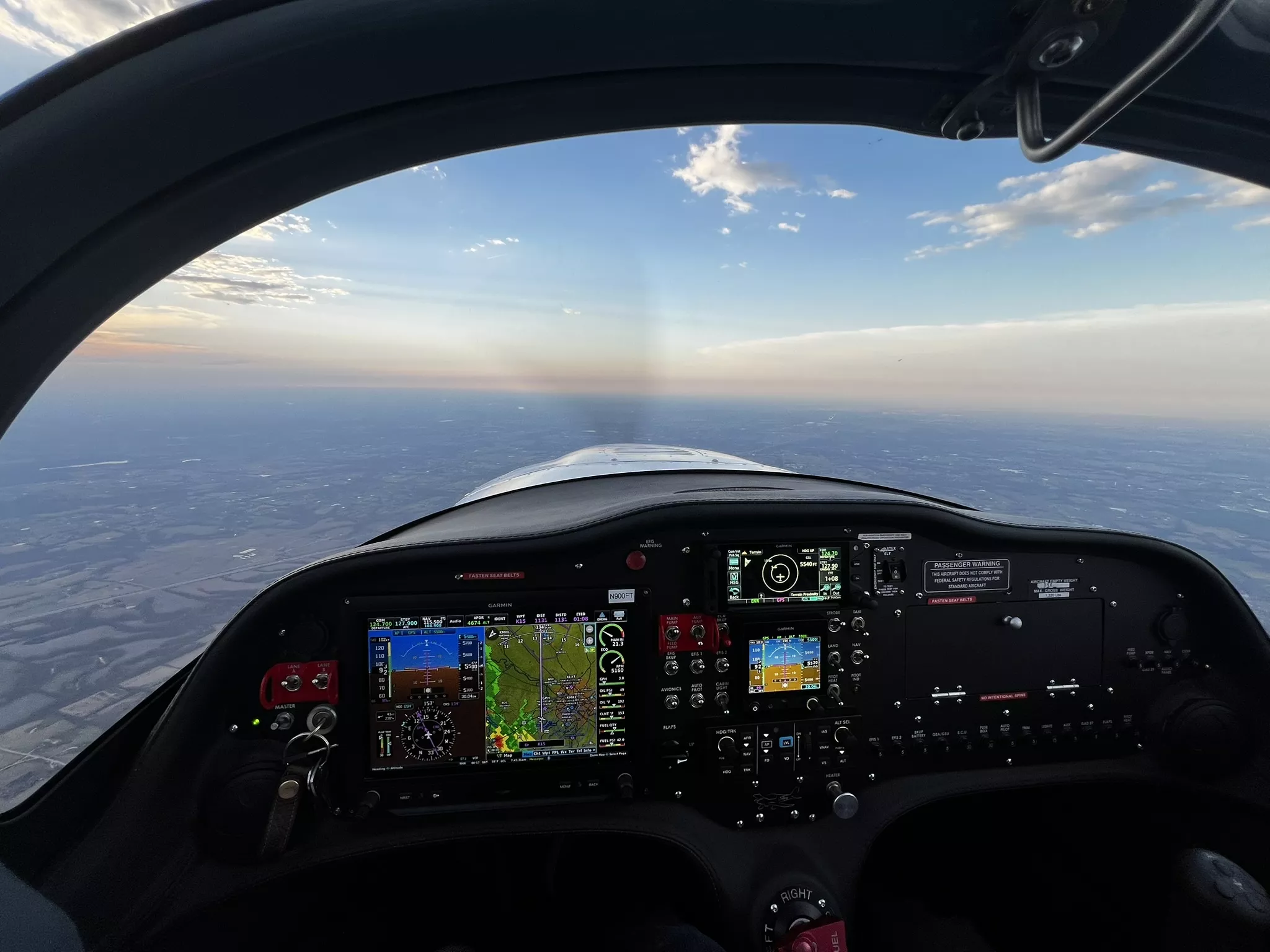
Then you climb in, buckle up, and taxi. On the first flight, you handle the basics: taxiing, climbs, descents, leveling off, and turns. Your instructor takes care of anything you have not learned yet and is ready to take the controls at any moment. Radio calls and full takeoffs come in the next few lessons.
Then comes your first gentle turn. You move the stick, the wing drops, the nose swings across the horizon, and the airplane answers you. Because our airport is uncongested, you spend less of the lesson waiting at the runway and more of it flying. That quiet field is a big reason Kansas City students make the drive north.
Your exact plan can shift with weather and your instructor’s judgment that day. If conditions are not safe, we reschedule at no charge and can use the time for ground work or the simulator instead.
The Debrief and Your First Logbook Entry
Back on the ramp, your instructor walks through what went well and what comes next, and you can ask about anything that felt strange in the air.
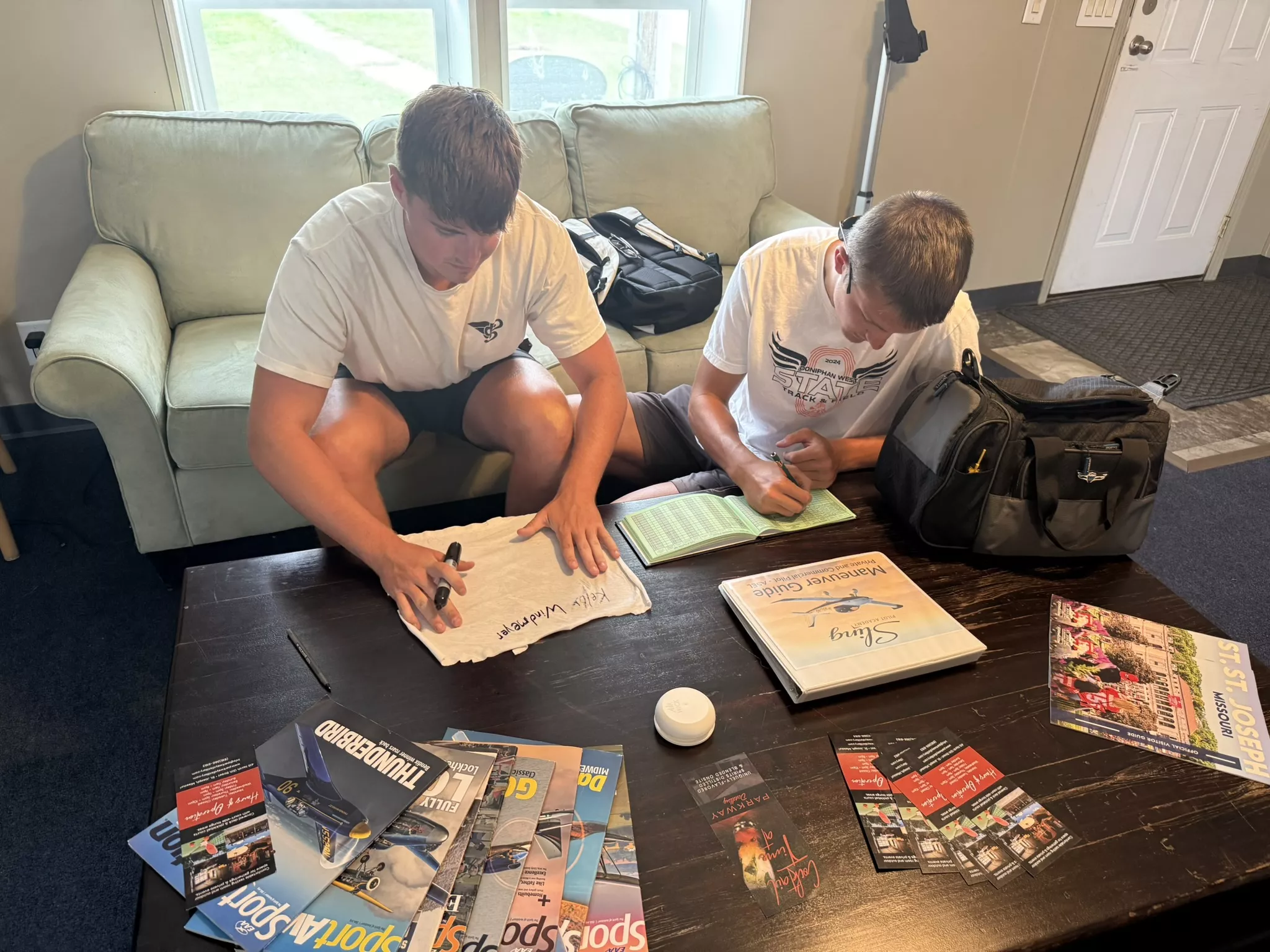
Then comes your first logbook entry. Every training flight must be written up with a description of what you trained and how long the lesson lasted, signed by your instructor with their certificate number. Those signed entries are the record that shows you met the FAA’s minimums when you reach your checkride, so keep the logbook somewhere safe.
Each lesson is billed as you go, airplane time plus instructor time, so you always know where you stand. If you want to see the math for a single lesson, read how much a sport pilot lesson costs in 2026. For the full certificate, our estimate is around $8,500, and our financing page covers options for recreational students, including AOPA financing and local bank loans.
How to Prepare So Your First Lesson Feels Easier
A little homework before lesson one makes the airport and the airplane feel familiar. Before you show up:
- Watch the Sling preflight video and cockpit tour in our student resources
- Log in to your online ground school and start the first module
- Sleep well and eat beforehand, since IMSAFE applies to you from day one
- Write down your questions, so you do not forget them on the ramp
- Arrive with your ID and your logbook ready
Our ground school options pair online study with in-person sessions, and starting early keeps the FAA knowledge test from piling up later. If you are curious how recent rule changes opened up sport flying, read Sport Pilot in the MOSAIC Era.
Frequently Asked Questions
Will I fly on my first sport pilot lesson?
Yes, in most cases. Part of the lesson happens on the ground, with the briefing and the preflight, and then you fly with your instructor. If weather makes it unsafe, we reschedule at no charge and use the time for ground work or the simulator.
Do I need a student pilot certificate before my first lesson?
No. You can fly lessons with your instructor before it arrives. You need it before your first solo, so we start your IACRA application at enrollment. Our light sport pilot training FAQ answers other common start-up questions.
Do I need an FAA medical for sport pilot lessons?
Not if you hold a valid U.S. driver’s license and meet the conditions: follow its restrictions, your most recent FAA medical application (if any) was not denied, and you know of no condition that would make flying unsafe.
What ID should I bring?
Bring your U.S. passport, or your driver’s license or state ID plus your birth certificate. Federal security rules require us to verify citizenship before flight training starts. Non-citizens should contact us before booking.
How old do I have to be?
You must be at least 16 for a student pilot certificate and at least 17 to earn the sport pilot certificate. Under 18, a parent or guardian signs the liability waiver.
Do I need my own headset?
Not right away. We provide headsets for your first few lessons. Our student resources include a recommended gear list for when you are ready to buy.
Book Your Discovery Flight and Take the First Step
If you have not flown with us yet, the first step before your first lesson is a discovery flight. You sit up front, take the controls with an instructor beside you, and see the airport, the airplane, and our team before you commit. Book your discovery flight and we will help you plan your first sport pilot lesson from there.
FlyTech Pilot Academy
Ready to take the next step in your aviation journey? Our team of expert instructors is here to guide you every step of the way. Whether you’re looking to earn your private pilot certificate or advance your skills with additional ratings, we’re here to help you achieve your goals.