How to Lower the Cost of Commercial Pilot Training in 2026
Published by:
FlyTech Pilot Academy
You already hold your Private Pilot Certificate and Instrument Rating, and the next number on your mind is the commercial pilot training cost. At FlyTech Pilot Academy, we plan on about $23,500 for the commercial stage at our posted rates, and the final total moves with the hours you fly. That means you have more control over the bill than you might think.
This guide shows where the money goes in commercial training and the choices that keep the total down: using the simulator for the right work, flying on a steady schedule, showing up prepared, and spreading payments. For the line-by-line numbers, see our commercial flight training cost breakdown. Here, we focus on how to spend less.
Airplane Time
Commercial training looks like a long list of line items, but the spending falls into three groups: airplane hours, instructor time, and the checkride. Airplane time is by far the largest.
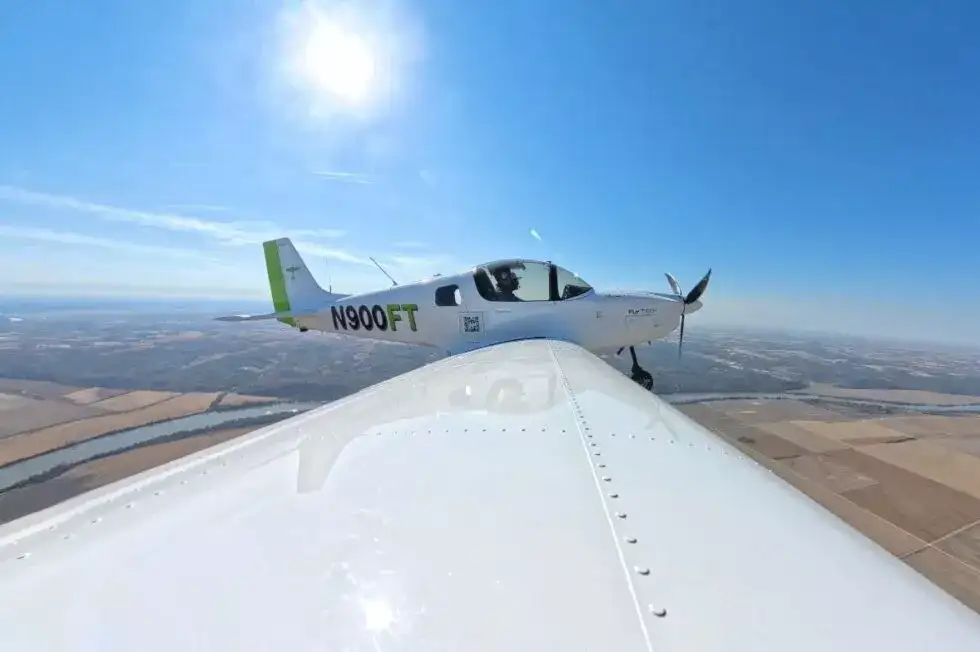
In our commercial stage, 50 hours of remaining pilot-in-command (PIC) time and 30 dual hours in our Sling make up 80 airplane hours at $185 an hour, the largest block in the stage. PIC time is the time you log as the pilot in charge of the flight, and it builds toward the 250 total hours a commercial certificate requires.
The rest is smaller. Instruction runs $60 an hour, the Redbird simulator is $50 an hour, and your FAA checkride and the written test together are $1,200. You also complete 30 hours of ground school. Every saving idea below comes back to one goal: fly fewer airplane hours that teach you nothing new, and get more learning out of each hour you do fly.
If you are still deciding whether the commercial stage fits your plans, our post on private vs. commercial pilot license explains how the two certificates differ before you commit a budget.
Let the Simulator Carry the Practice That Does Not Need an Airplane
Our aircraft rate is $185 an hour. The Redbird simulator is $50 an hour. Instruction is $60 an hour in both places. A dual hour in the airplane is $185 for the aircraft and $60 for the instructor. A simulator hour is $50 for the simulator and $60 for the instructor. The simulator rate is much lower than the aircraft rate, $50 an hour against $185.
The savings come with a real training benefit. In our Redbird full-motion simulator, your instructor can pause a scenario, reset you to the start of an approach or a procedure, and let you repeat it several times in a single session. You rehearse the sequence, the radio calls, the checklist flow, and the decision points, so the airplane hour is spent polishing the flying instead of discovering the plan.
Our commercial estimate already includes 27.5 hours in the simulator, with instruction. To see what that choice is worth, price those same hours at the airplane rate: 27.5 hours at $185 is about $5,090 in machine cost, against $1,375 in the Redbird. The gap is about $3,700. Treat that as an illustration of the rate difference. The simulator does not replace every airplane hour, and your instructor decides which sessions belong in each seat.
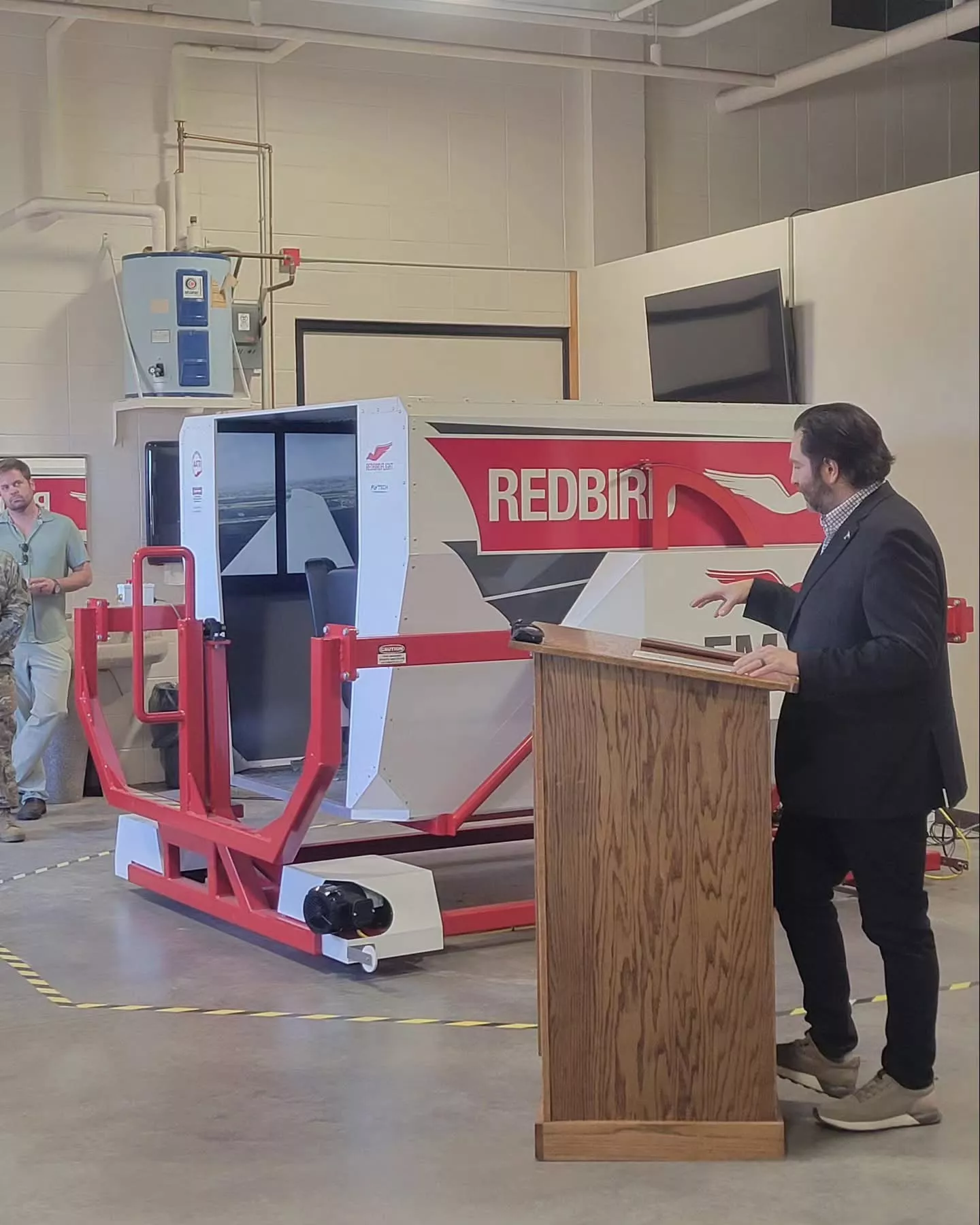
Weather days work in your favor too. If conditions are not safe, we reschedule your lesson at no charge, and we can use that slot for ground instruction or simulator work, so you keep moving without paying for a flight that never left the ramp.
Fly on a Steady Schedule So You Stop Paying to Relearn
A long gap between lessons has a price. When you return after weeks away, the first hour goes to shaking off rust: holding altitude, rebuilding the feel for a maneuver, remembering the flows. That hour still costs $185 for the aircraft and $60 for the instructor, and it teaches you what you already knew last month.
A steady rhythm keeps each lesson building on the last. Pick a schedule you can truly keep, even if it is a smaller number of lessons per week, and protect it. Most students complete the commercial stage in 2 to 3 months, depending on how often they fly and what the weather allows. Our flexible and accelerated training options let you choose the pace that suits your job and your budget.
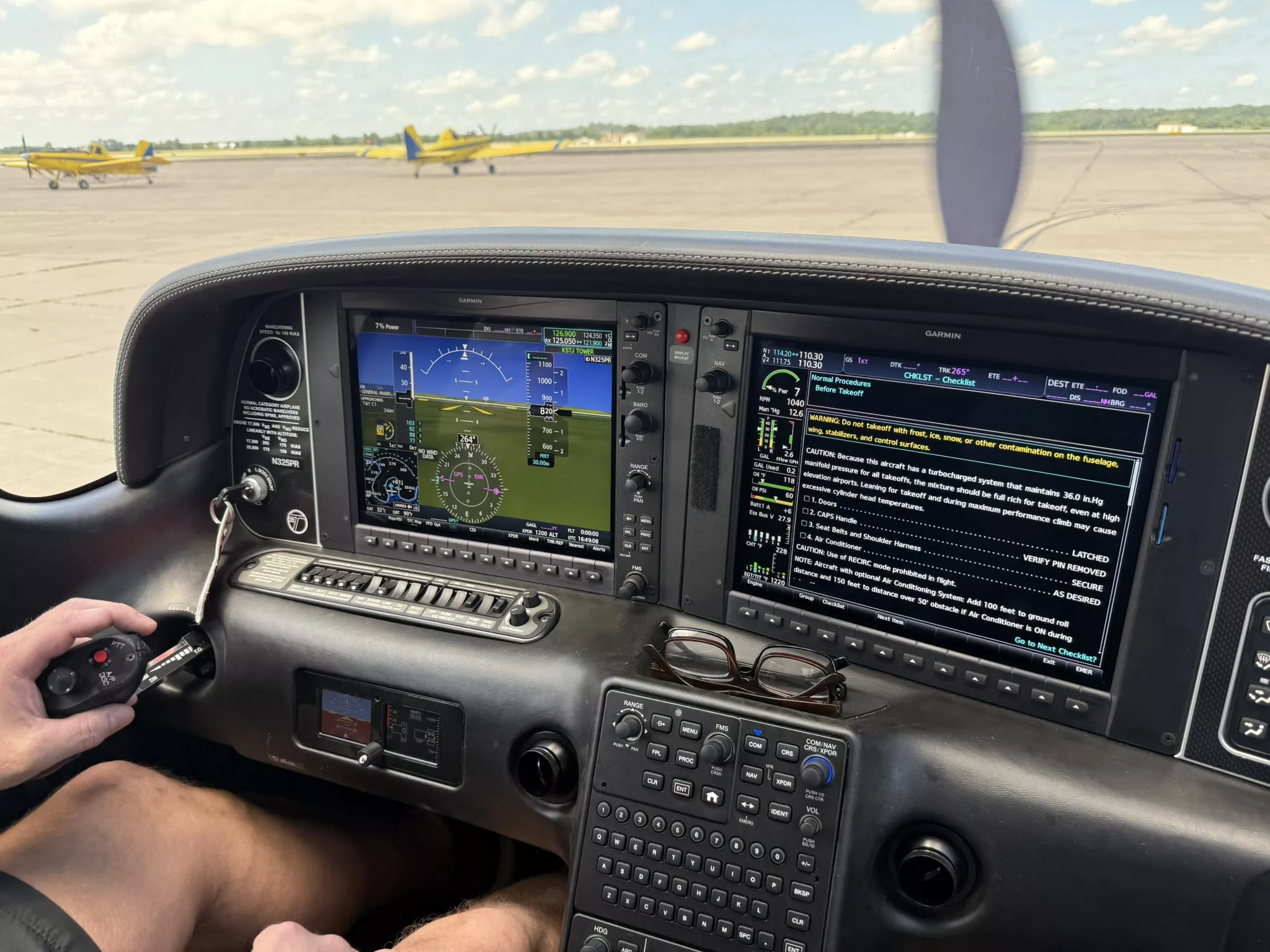
If you commute from Kansas City, Wichita, or Omaha, stack your lessons on the same day. A morning flight, a midday simulator session, and an afternoon briefing make one trip count for three. Limited on-airfield housing is also available for students who come from farther away.
Show Up Prepared So Every Briefing Hour Counts
Your estimate includes 14 hours of pre-flight and post-flight instruction at $60 an hour. Those hours are valuable when you arrive ready to use them. They get expensive when your instructor spends half the briefing teaching material you could have covered at home.
Before each flight, finish the flight plan, check the weather, and write down the two or three questions you want answered. After each flight, note what went wrong while it is fresh so the debrief goes straight to the fix. The 30 hours of ground school in your stage work the same way: study the material first, and the airplane becomes practice instead of a classroom.
Preparation also protects your airplane hours. A student who knows the maneuver sequence on the ground flies it correctly in fewer attempts, and fewer attempts mean fewer $185 hours.
Book the Checkride When You Are Ready, Not Just Eligible
Your checkride and written test total $1,200 in our estimate. The way to keep that line from growing is to walk in prepared. The commercial practical test is graded against the FAA’s Airman Certification Standards, which list every task, the knowledge behind it, and the standard you must meet.
Use that document as a checklist. Go through each task with your instructor and mark the ones you can do to standard without help. When the list is done, you are ready. When tasks are still shaky, extra practice before the test costs less than an attempt you are not prepared for. An FAA inspector or a designated pilot examiner conducts the test, and a rushed attempt wastes a day you have already paid for.
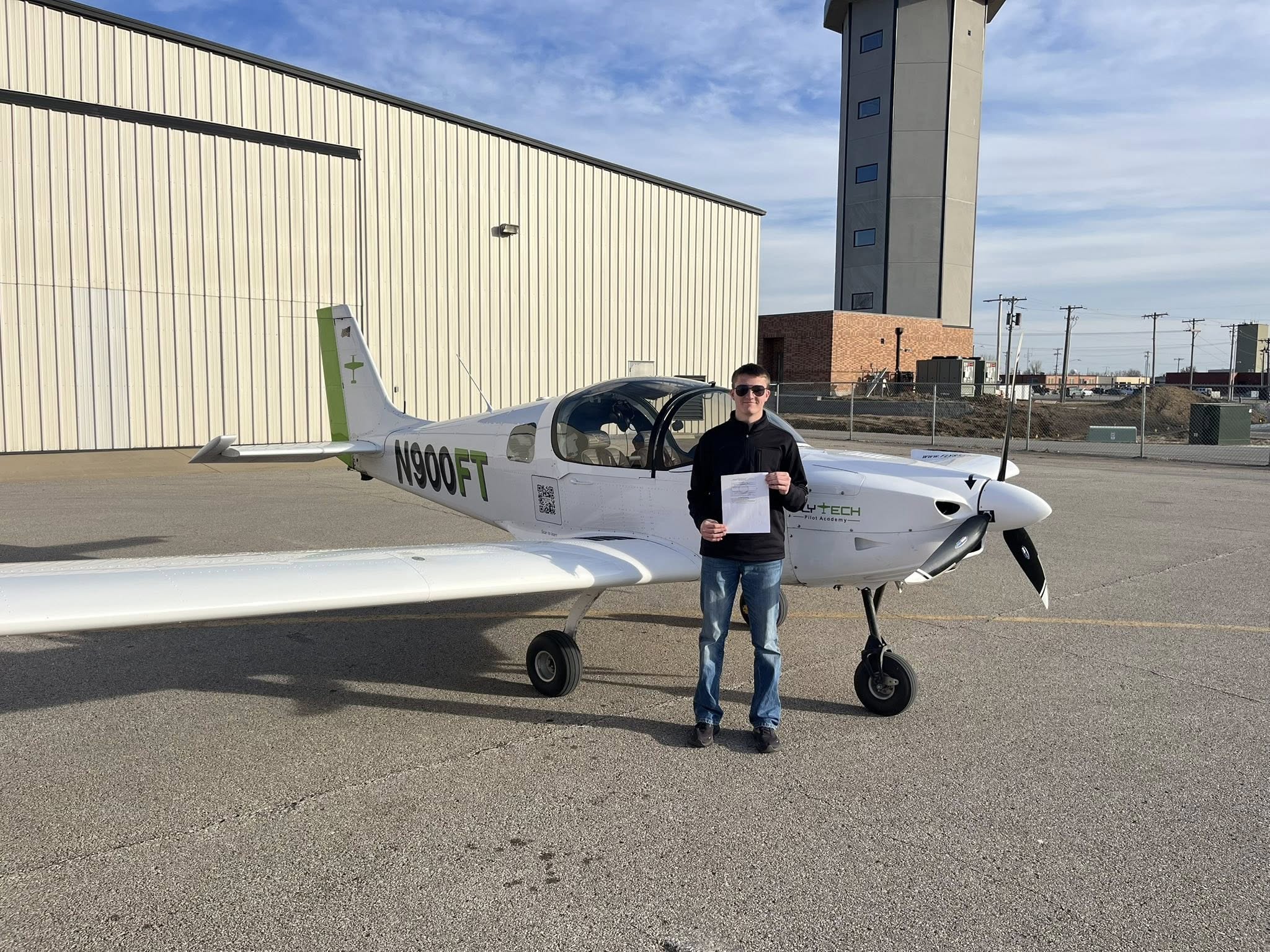
Your instructor can run a mock oral and a practice flight so nothing on test day is a surprise. Our commercial pilot program is built to get you to that point with a clear list of what remains.
Spread the Cost with Pay As You Go, Bulk Time, and Financing
You do not need the whole $23,500 on day one. At FlyTech, you pay as you go, flight by flight, so the stage is a series of small payments tied to the hours you actually fly. That alone keeps you from prepaying for training you might finish faster than expected.
Two more options help:
- Bulk time at discounted rates. Students can purchase flight time in bulk at a discount. Contact us to confirm current rates and how bulk time applies to the commercial stage.
- Financing through Stratus Financial. Financing options may be available to qualified applicants, and you can learn more on our financing page.
If you want the wider picture across every certificate, our pilot school cost guide shows how the whole journey adds up and where students tend to overspend.
Your Four-Step Plan to Lower the Total
Put the ideas above to work this month:
- Set a flying rhythm you can hold for the whole stage, and book your lessons ahead.
- Ask your instructor which sessions belong in the simulator, and use weather days for sim time.
- Prepare for every briefing with a finished flight plan and a short list of questions.
- Use the Airman Certification Standards as your checkride checklist and schedule the test when every task is solid.
Frequently Asked Questions
How much does commercial pilot training cost at FlyTech?
If you already hold your Private Pilot Certificate and Instrument Rating, plan on about $23,500 for the commercial stage. You pay as you go, and the itemized numbers are on our commercial pilot program page.
How much does it cost to get a commercial pilot license if I am saving money?
The biggest lever is airplane hours, which are the largest block of the stage. Fly steadily, use the simulator where your instructor recommends, and arrive prepared. Those habits cut the repeat practice that adds hours to your total.
Can I do commercial training in the simulator to lower the cost?
Part of it, yes. Our estimate includes 27.5 simulator hours at $50 an hour. The simulator is excellent for procedures and rehearsal, but it does not replace every airplane hour. Your instructor plans which sessions go where.
What do I need before I start commercial pilot training?
You need a Private Pilot Certificate, an Instrument Rating, at least 250 total flight hours, a minimum age of 18, and a valid FAA medical certificate. Our general flight training FAQs cover the medical and other starting questions.
How long does the commercial stage take?
Most students finish in 2 to 3 months, depending on how often they fly and the weather. A steady schedule is the best way to stay near that range.
Can I finance commercial pilot training?
Financing options through Stratus Financial may be available to qualified applicants. You can also pay as you go or purchase bulk time at discounted rates. Visit our financing page to get started.
What happens if weather cancels my lesson?
We reschedule at no charge, and we often use the time for ground instruction or simulator training so you keep making progress.
Plan Your Commercial Stage with Us
Your commercial stage is a set of choices you control: how steadily you fly, where you practice, how well you prepare, and how you pay. If you want a plan built around your schedule and budget, talk with our team about your commercial training and we will map it out together.

FlyTech Pilot Academy
Ready to take the next step in your aviation journey? Our team of expert instructors is here to guide you every step of the way. Whether you’re looking to earn your private pilot certificate or advance your skills with additional ratings, we’re here to help you achieve your goals.