Cost of Pilot Training in the USA: 2026 Guide
Published by:
Lute Atieh
Becoming a pilot is one of the most rewarding career paths you can choose. But before you begin, it is important to understand the cost of pilot training in the USA and how to plan for it.
Many students start training without a clear financial roadmap. That often leads to delays, repeated lessons, and higher total costs. The goal of this guide is to give you a clear, practical breakdown so you can move forward with confidence.
At FlyTech Aviation Academy, located in the St. Joseph Metropolitan Area (MO–KS MSA), students from Kansas City, Omaha, Wichita, Topeka, Lawrence, Independence, Lincoln, and even Des Moines train in an environment designed to reduce unnecessary costs and improve efficiency.
What Determines the Cost of Pilot Training in the USA
The total cost of pilot training depends on a few key factors. Understanding these early helps you avoid surprises later.
1. Training Frequency
How often you fly has a direct impact on cost.
Students who train consistently:
- Retain skills better
- Require fewer review lessons
- Finish with fewer total hours
Students who take long breaks often need to relearn skills, which increases cost.
2. Aircraft and Equipment
Training in modern aircraft with updated avionics can improve learning speed. While hourly rates may vary, better equipment often reduces total training time.
3. Instructor Approach
At FlyTech, instructors focus on mentorship, not just evaluation. This helps students understand why they are doing something, not just how.
That approach reduces confusion and speeds up progress.
4. Location and Airspace
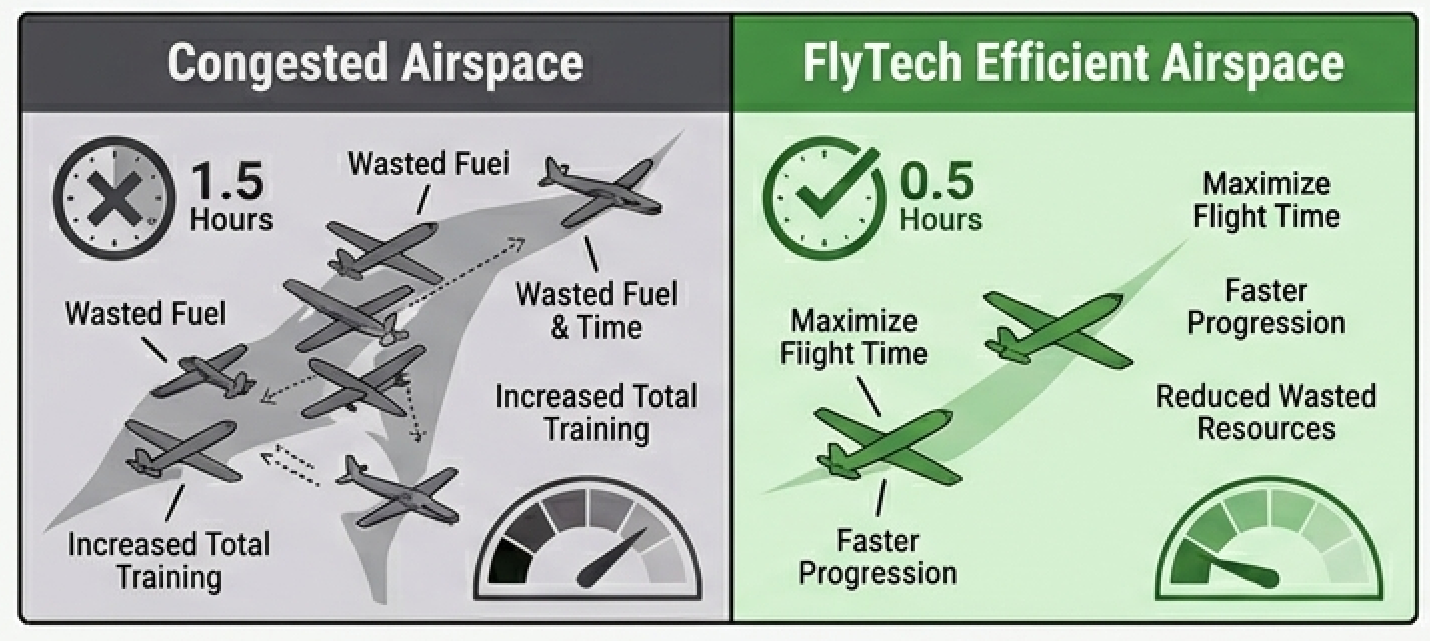
Training near busy airports can increase costs due to delays. Students in high-traffic areas often spend more time taxiing and waiting.
Training in a lower-traffic environment like St. Joseph allows you to maximize time in the air.
Typical Cost of Pilot Training in the USA
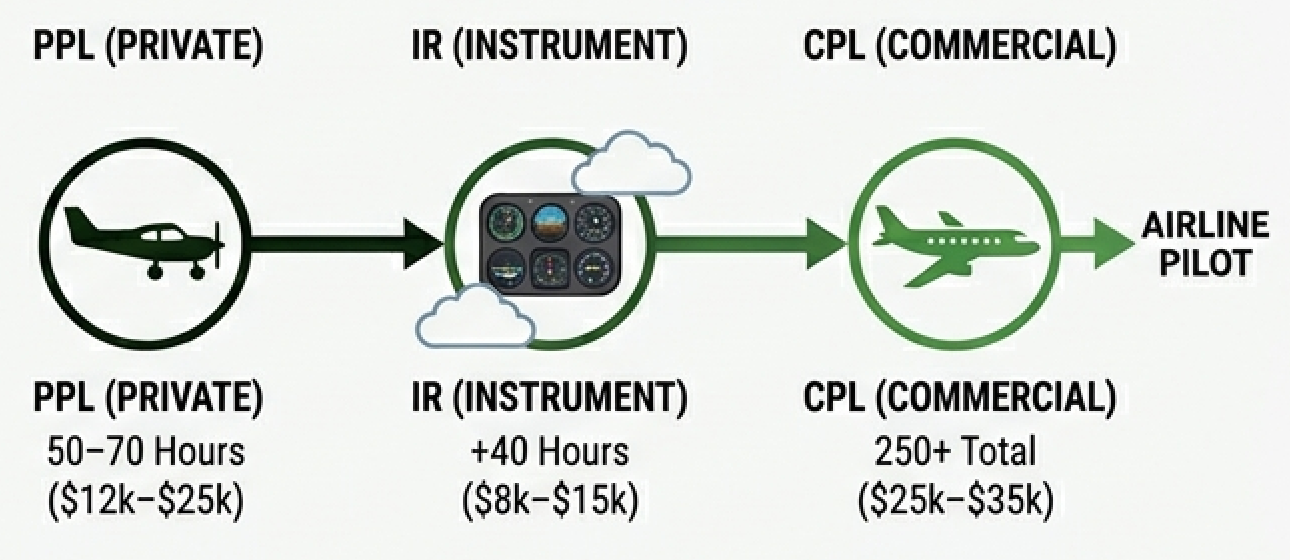
Here is a realistic breakdown of common training costs:
- Private Pilot License (PPL): $12,000–$25,000
- Instrument Rating (IR): $8,000–$15,000
- Commercial Pilot License (CPL): $25,000–$35,000
- Additional ratings and hour building: variable
These ranges depend heavily on training efficiency and consistency.
You can explore available options on our flight training programs page.
Breaking Down Each Stage of Training
Private Pilot Certificate
This is where every student starts.
You will learn:
- Basic aircraft control
- Navigation
- Communication
- Safety procedures
Most students finish between 50–70 hours depending on consistency. For a detailed breakdown of hourly rates, simulator cost reductions, and budgeting benchmarks, read our comprehensive Private Pilot License Cost Guide and explore our Private Pilot Cost FAQs.
If you are looking for a lower-cost entry point, consider starting with a sport pilot certificate, which requires fewer hours.
Instrument Rating
This stage teaches you to fly using instruments instead of visual references.
You will learn:
- Navigation in low visibility
- Advanced flight planning
- Weather interpretation
This rating adds safety and opens more career opportunities.
Learn more about our instrument rating training.
Commercial Pilot Certificate
This is where you transition into professional flying.
You will:
- Refine precision flying
- Build advanced skills
- Prepare for paid flying roles
Explore the commercial pilot program for full details.
Hidden Costs Most Students Miss
Many students focus only on flight hours. That is only part of the total cost.
Additional expenses may include:
- Written exam fees
- Checkride examiner fees
- Headsets and supplies
- Study materials
Planning for these early helps you avoid financial stress later.
How to Reduce the Cost of Pilot Training
Reducing cost is not about cutting corners. It is about training smarter.
1. Stay Consistent
Flying 2–3 times per week helps you retain skills and avoid repeating lessons.
2. Use Simulators Effectively
Simulators allow you to practice procedures at a lower cost while reinforcing real-world skills.
3. Choose the Right Training Environment
Training outside congested airspace reduces wasted time.
Students commuting from Kansas City or Independence often find they progress faster training in St. Joseph.
4. Work with a Structured Plan
At FlyTech, students follow structured programs designed to minimize delays and maximize efficiency.
Real Example: Cost Impact of Consistency
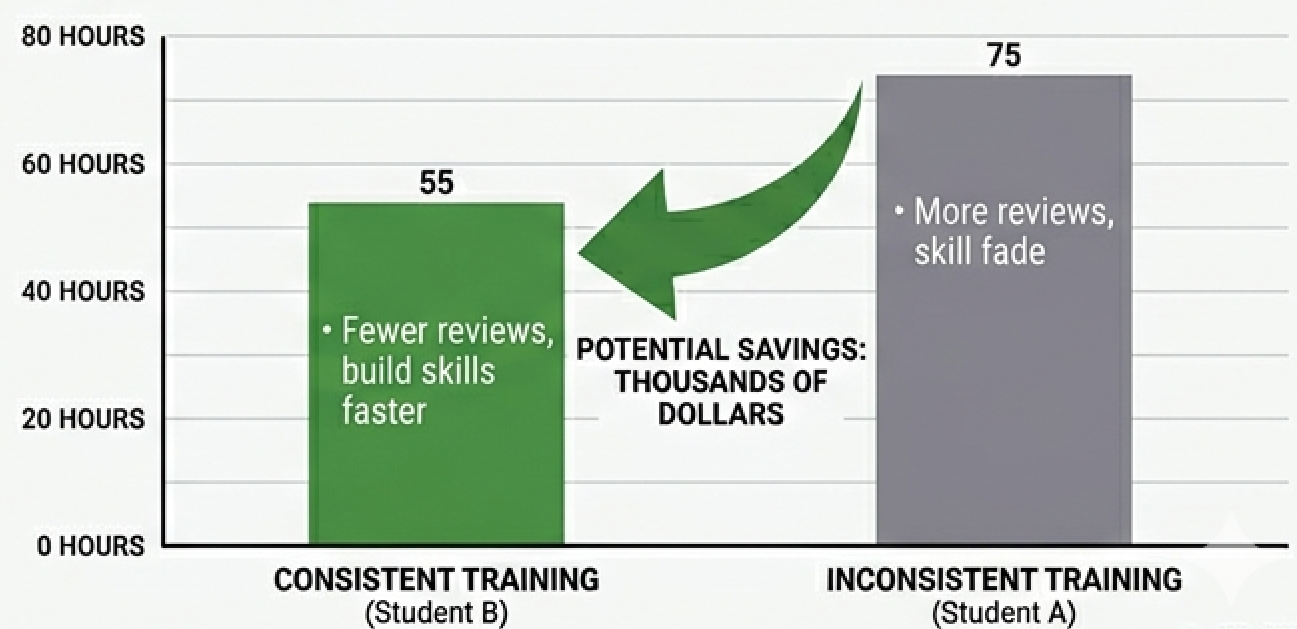
Two students start at the same time:
Student A:
- Flies once every two weeks
- Needs frequent review
- Finishes in 75 hours
Student B:
- Flies 2–3 times per week
- Builds skills quickly
- Finishes in 55 hours
That 20-hour difference can represent thousands of dollars saved.
Is Pilot Training Worth the Cost?
Pilot training is an investment.
It can lead to:
- Airline careers
- Charter flying
- Corporate aviation roles
Beyond career opportunities, it also provides a skill set that few people have.
The key is making sure your investment is efficient.
Common Questions About Pilot Training Costs
How long does it take to become a pilot?
Most students complete their private pilot training in 6–12 months with consistent scheduling.
Can I train while working full-time?
Yes. Many students from Lawrence, Topeka, and Lincoln train part-time using flexible schedules.
What is the fastest way to reduce costs?
Consistency is the biggest factor. Training regularly reduces total hours required.
Pilot Training Starter Checklist
Before you begin, make sure you:
- Set a realistic budget
- Choose a consistent training schedule
- Select a school with efficient operations
- Understand the full training path
FlyTech offers a Pilot Training Starter Checklist that includes:
- Budget planning template
- Step-by-step training roadmap
- Weekly schedule examples
You can request it through our contact page.
Investing in a High-Value Career
The cost of pilot training in the USA is significant, but it is manageable with the right approach.
Training in the right environment, with the right instructors, and with a clear plan can make a major difference.
If you are ready to take the first step, start with a discovery flight and experience what training is like firsthand.
Blue skies,
FlyTech Team

FlyTech Pilot Academy
Ready to take the next step in your aviation journey? Our team of expert instructors is here to guide you every step of the way. Whether you’re looking to earn your private pilot certificate or advance your skills with additional ratings, we’re here to help you achieve your goals.